
Reclamation
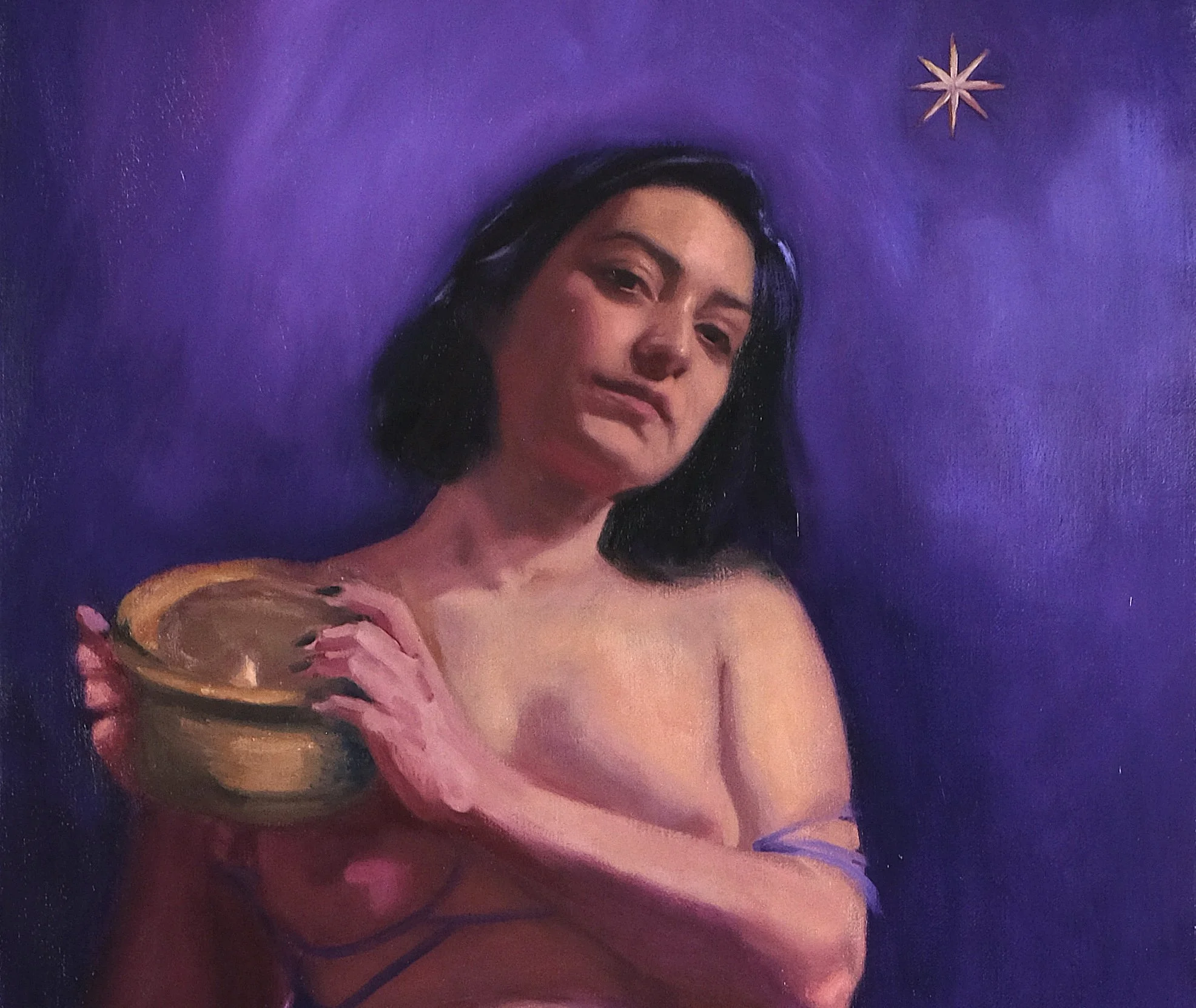
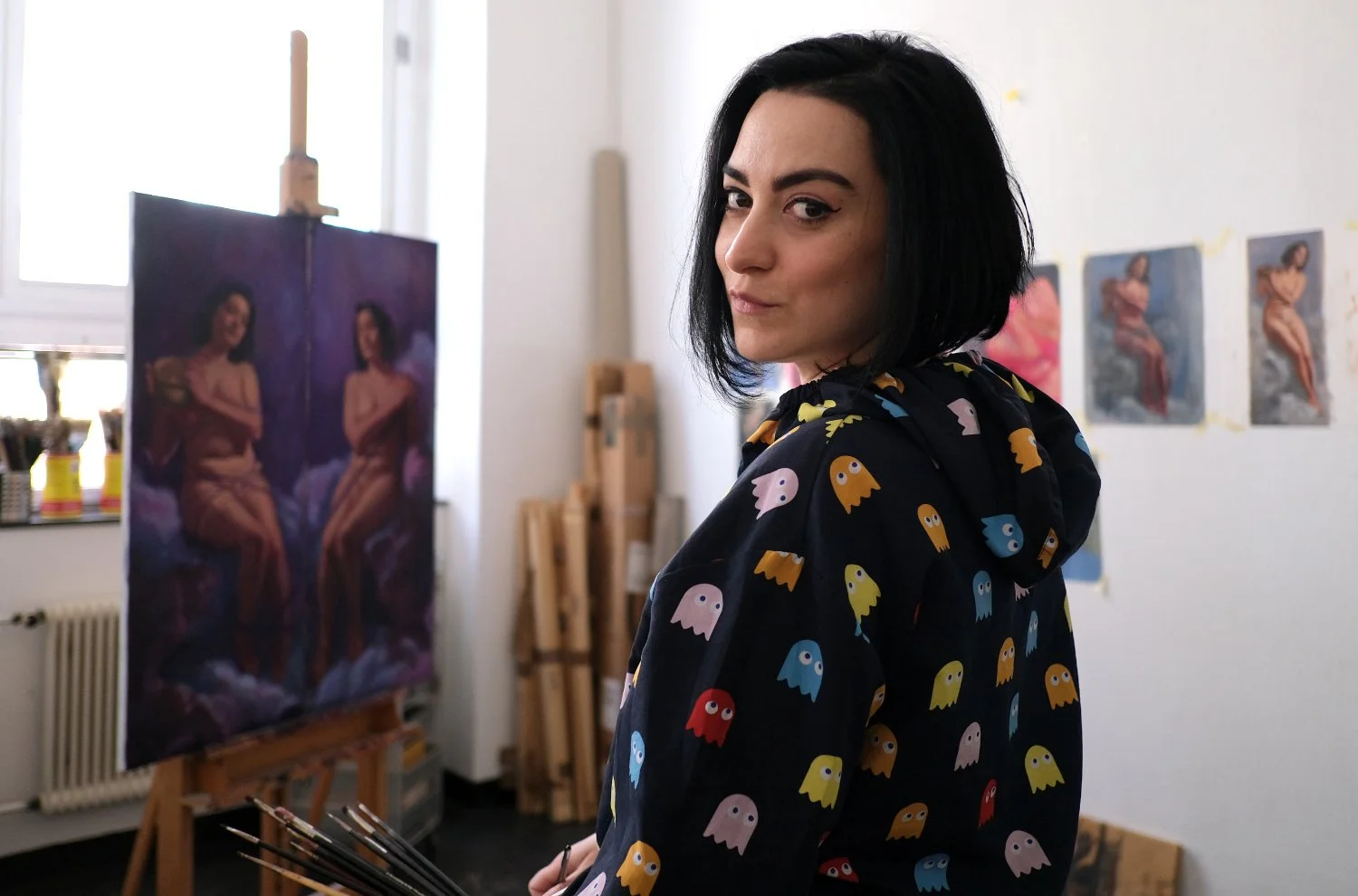
This is the first painting I have finished since coming back to my art career, and in this blog post, I’m sharing a deep dive into what inspired it, my thought process while making the work and the research done for the piece.
I’ve been thinking about making this work for almost 2 years now. In 2023, I was living in Florence and was invited by the BBC to shoot a segment for Rob and Rylan’s Grand Tour. We filmed for a whole day and I left the set exhausted and excited to see the result. A year later, the program aired. At that point, I was no longer living in Florence; I had been in a crisis for a long time, had taken a break from painting, and was trying to rebuild my life. When I watched the show, the segment before mine was about the restoration of Artemisia Gentileschi’s painting Allegory of Inclination. Inclination hangs on the ceiling in Casa Buonarroti, just a couple of blocks from where I used to live in Florence. I had never heard of this painting before, and to be honest, Casa Buonarroti was always on my places-to-visit-that-I-never-got-around-to list, but when I saw this painting, I was immediately hypnotized.
It was commissioned by Michelangelo Buonarroti III, the great-nephew of Michelangelo, to decorate the ceiling of the Buonarroti family home. This was one of many pieces commissioned from many artists, and, according to records, Artemisia was the highest-paid artist (by far) - a testament to her status and artistry.
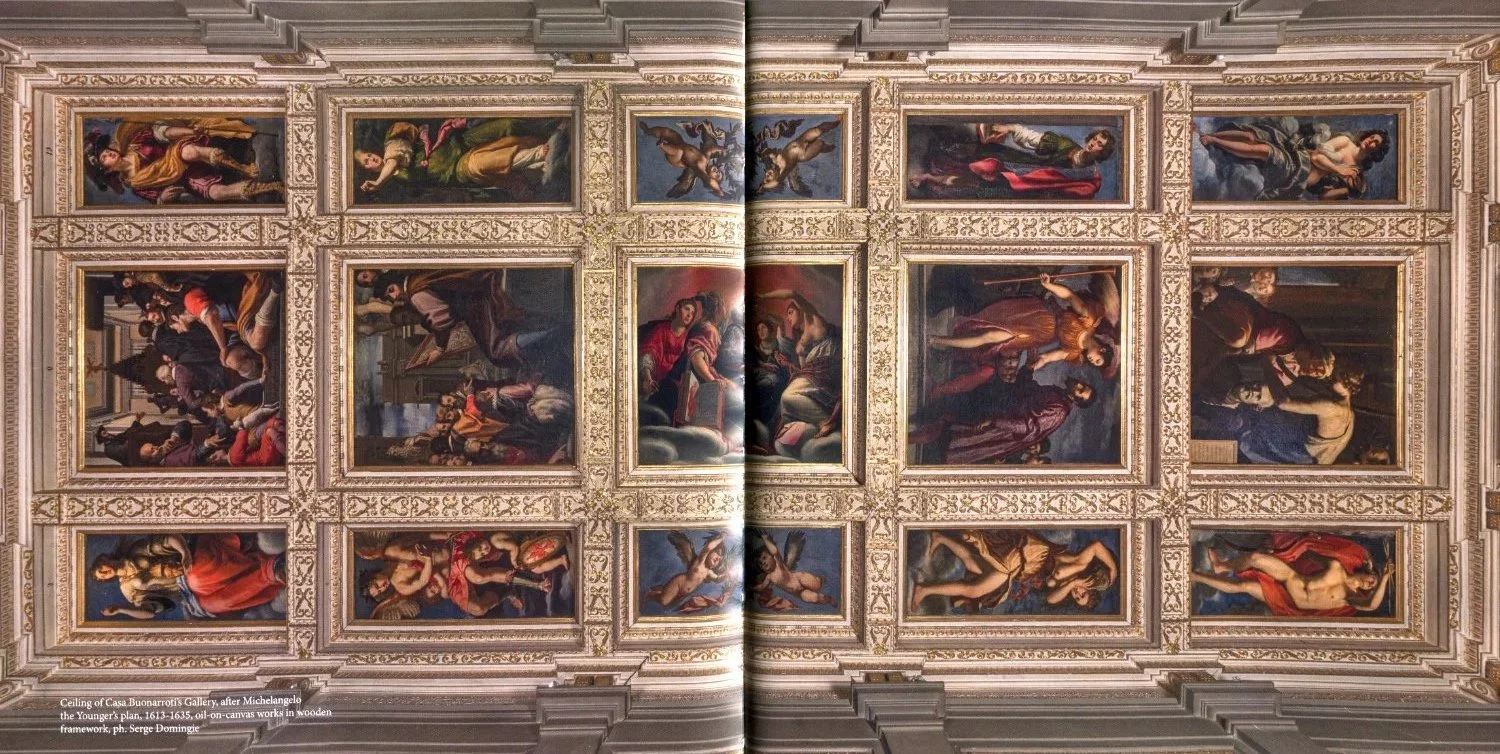
The ceiling in Casa Buonarroti. Inclination is on the top right.
Spread from the book Artemisia: Up Close, published by the Florentine Press
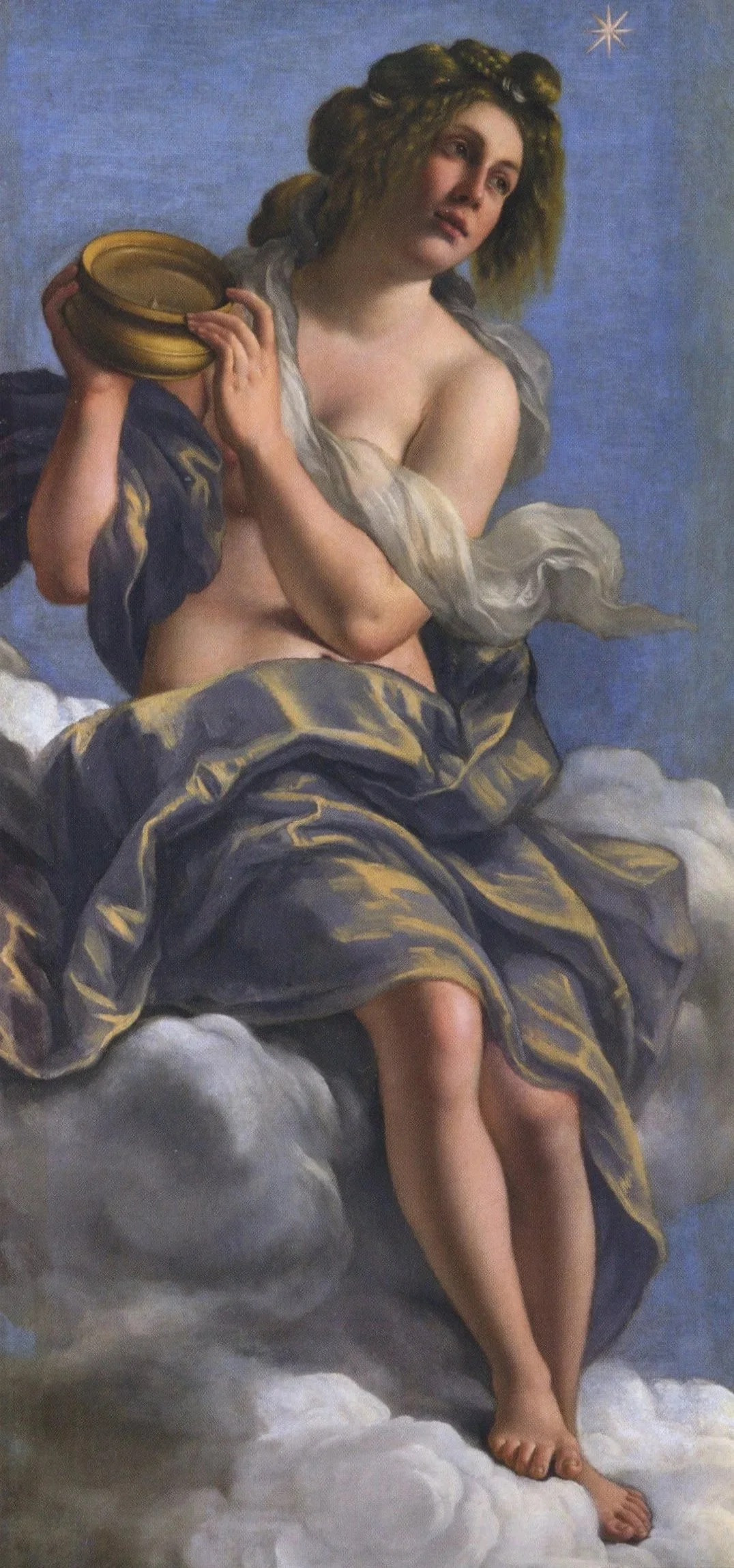
It is an oil painting of a woman leaning to one side, draped in a luscious silk cloth and surrounded by clouds. She holds a maritime compass that points north with both hands, and her body is directed towards the north star in the top right of the image. It depicts Inclination — “a notion of the unwavering direction of Michelangelo’s artistic temperament towards the truth, in support of and supported by his intellect” — Elizabeth Cropper.
What fascinated me was that Artemisia chose to include herself as the subject, painting the head as a self-portrait. She not only painted herself as Inclination, but by painting her hair dark and disheveled, she also alluded to the iconography of Pittura, or painting (we’ll get to that in a bit).
Artemisia Gentileschi, Allegory of Inclination
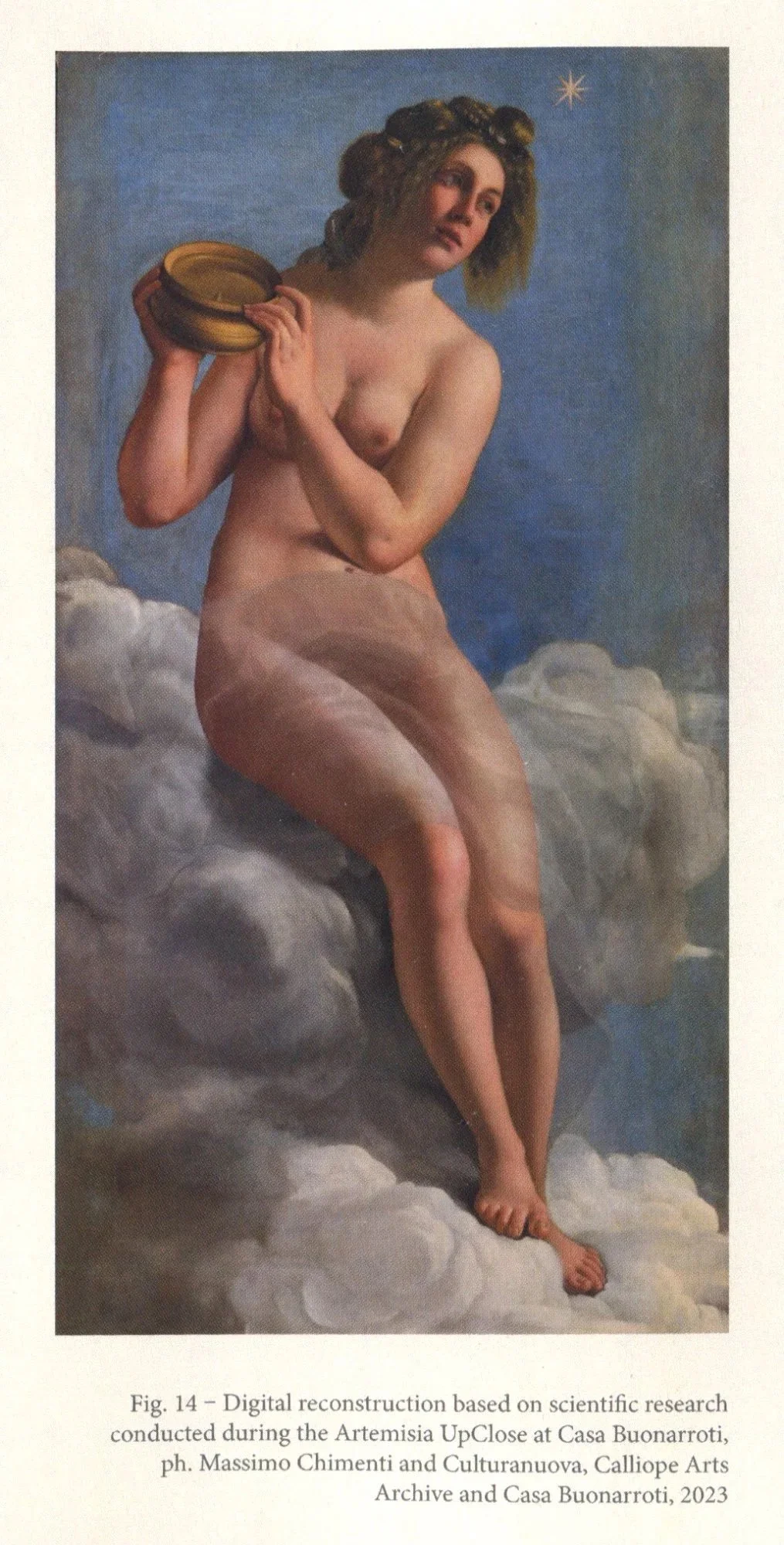
Moreover, during its restoration, it was discovered that the cloth that drapes the figure’s body was added a hundred years after the painting was finished, so in actuality, this was her first (and only known) nude self-portrait, which was censored and made modest by a later hand.
Here’s a quote I like: “While nudity in male figures is associated with power… nude or semi-nude female figures often represent passive beauty, and lack agency or authority. Artemisia seems to want to test this imbalance, asking us to think of her allegory as equally empowered by her nudity.”— Artemisia and Michelangelo, Mary D. Garrard, p.30 Artemisia:Up Close. In positing herself as a crucial part of the allegory of inclination, she not only affirms her place as an artist, but positions herself as a counterpart to Michelangelo’s sculptural genius (an allegory of which hangs on the opposite side of the ceiling).
After seeing the painting, I bought the book that was published about the restoration, wrote a memo in my notes that said “Think of Artemisia”, and moved on with my life.
A year later, I took some photos. My initial idea was to solely replicate the painting. A nude self-portrait alluding to painting and the inclination to the arts. Master and muse all in one. Fitting, I thought.. At the time, I was in Vienna, and I managed to do 2 small sketches in a corner of our tiny flat. Then I stopped again.
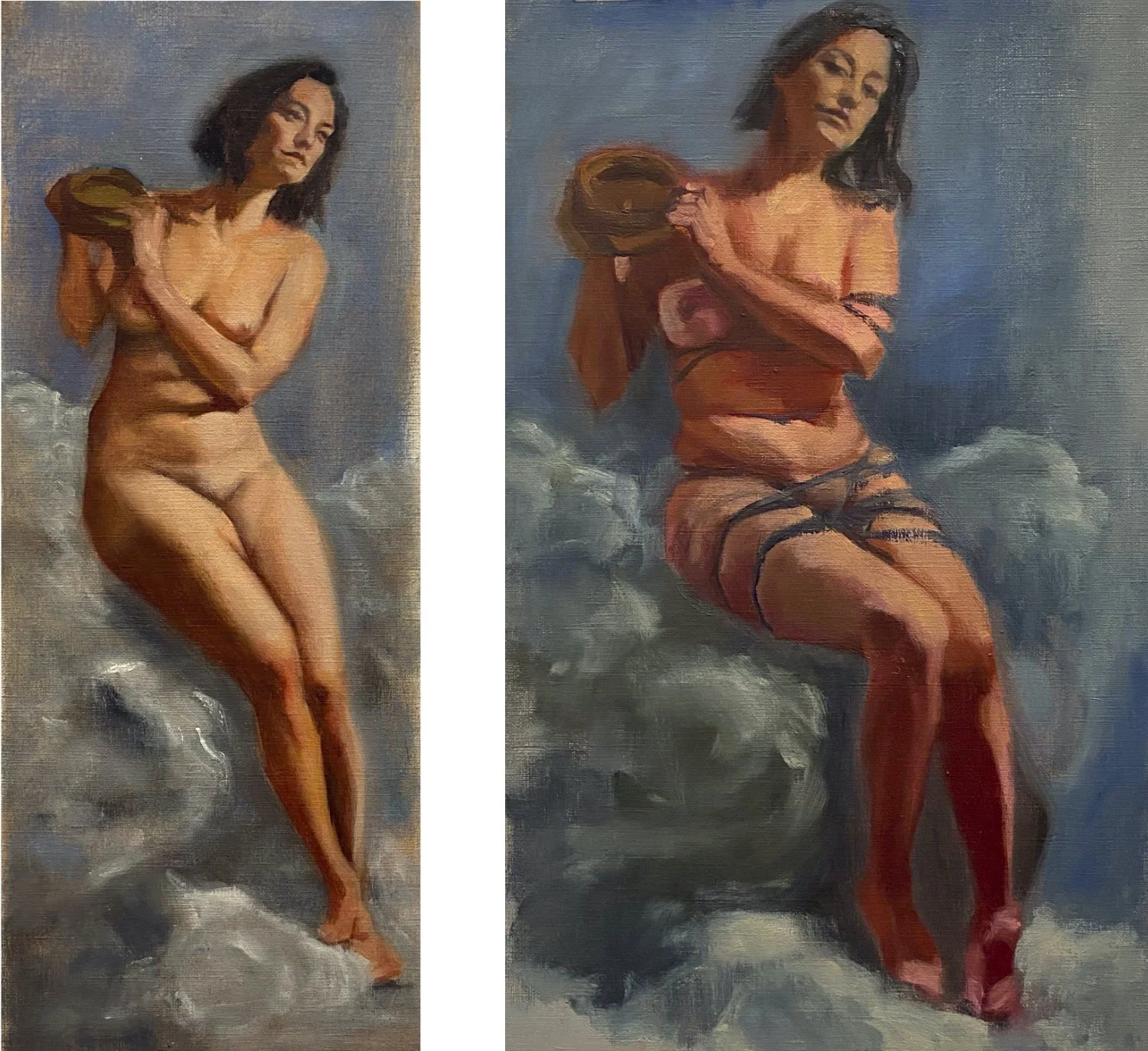
Finally, last year, I felt ready to come back to painting. I started thinking about this work again and realized that my initial concept for my interpretation of Inclination was changing into something else. I had this new idea that I couldn’t shake. The painting had to be two paintings - a diptych. For me, it was important to paint not only my inclination to the arts, but the shadow side as well, the side that holds me back from fulfilling that destiny. And so, what came out was just that. On the left is my version of Inclination - daring, confident, and staring directly at the viewer. Her torso and hips are bound by rope. The figure on the right is the ever-doubtful and sabotaging mind. She looks at the left figure with worry and hesitation as she pulls on a rope that connects to the tied ankles of the figure on the left.
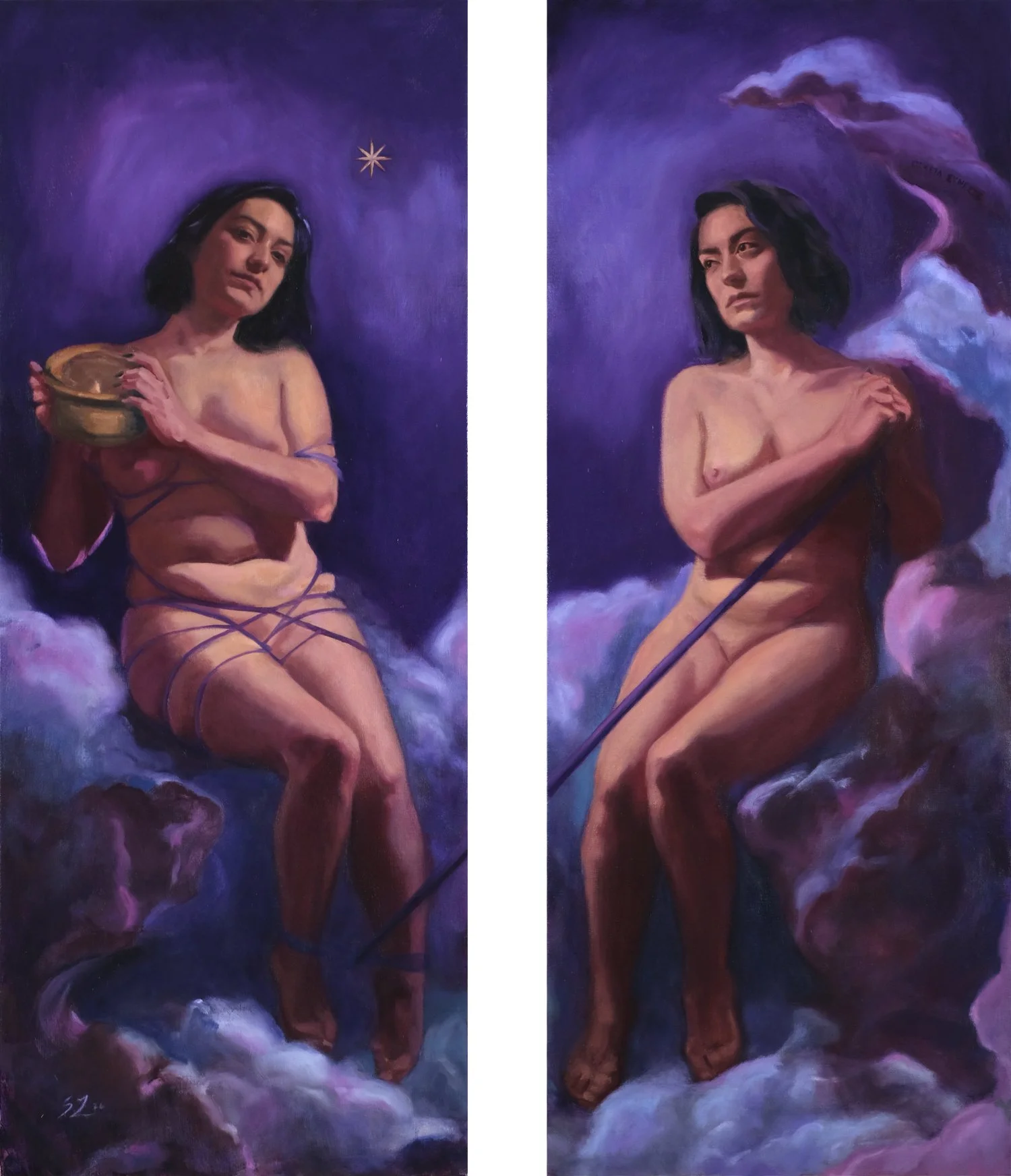
For now I’m calling the two paintings Reclamation
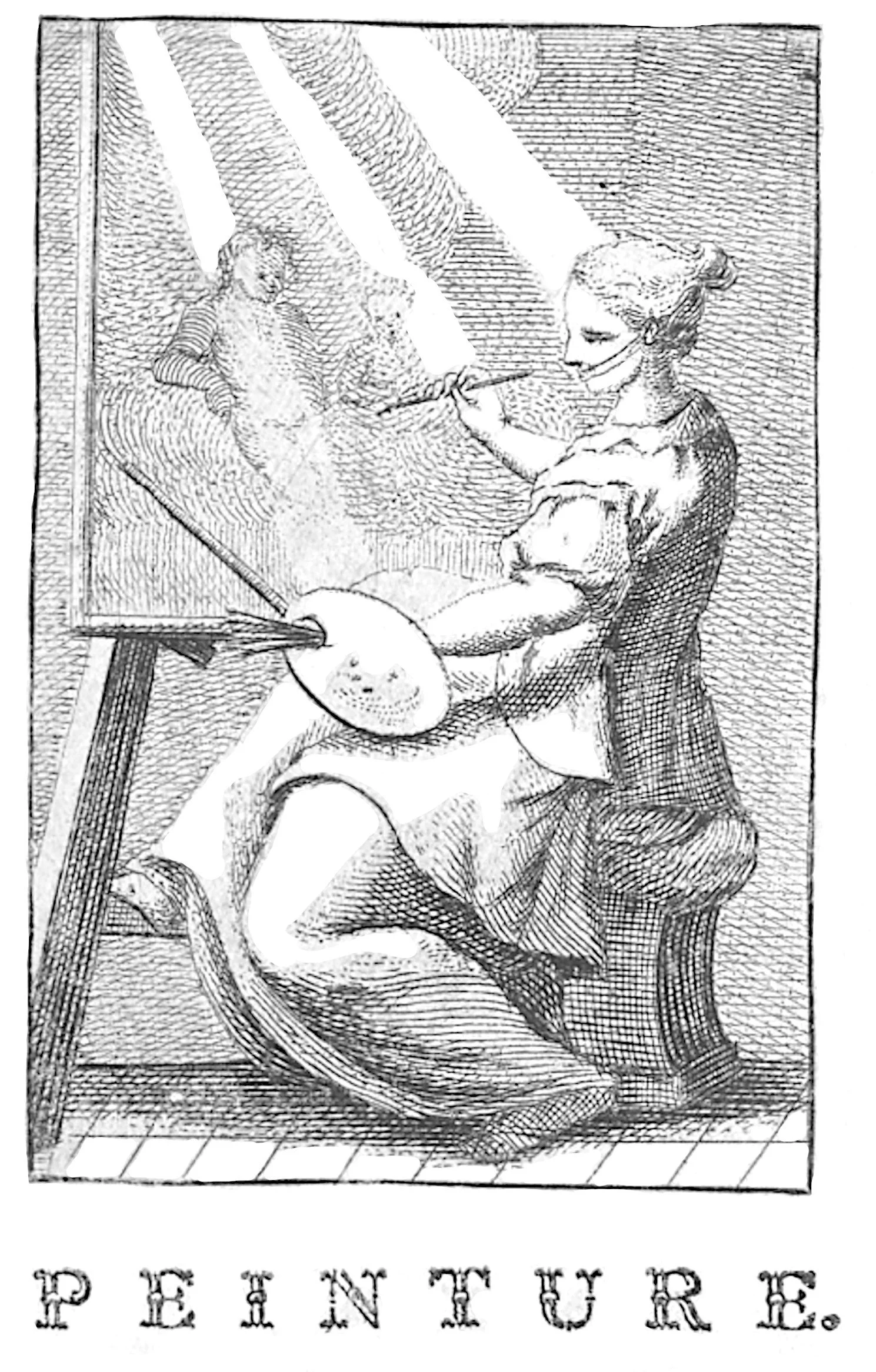
The binds serve three purposes. The rope around the feet is a reference to the pulley that Michelangelo the Younger originally intended for Inclination to have by her feet. Fun Fact: in his initial idea for Inclination, the feet were bound by chains - this was later changed to a pulley by her feet, but ultimately Artemisia decided to exclude this altogether. The ties in general allude to the way Cesare Ripa (famous for writing an important book on iconology) described the allegory of Painting: ¨A beautiful woman, with thick, black hair, spread out and twisted in various ways, with arched eyelashes that reveal fantastic thoughts, covers her mouth with a band tied behind her ears,¨ — Cesare Ripa, Iconologia 1603
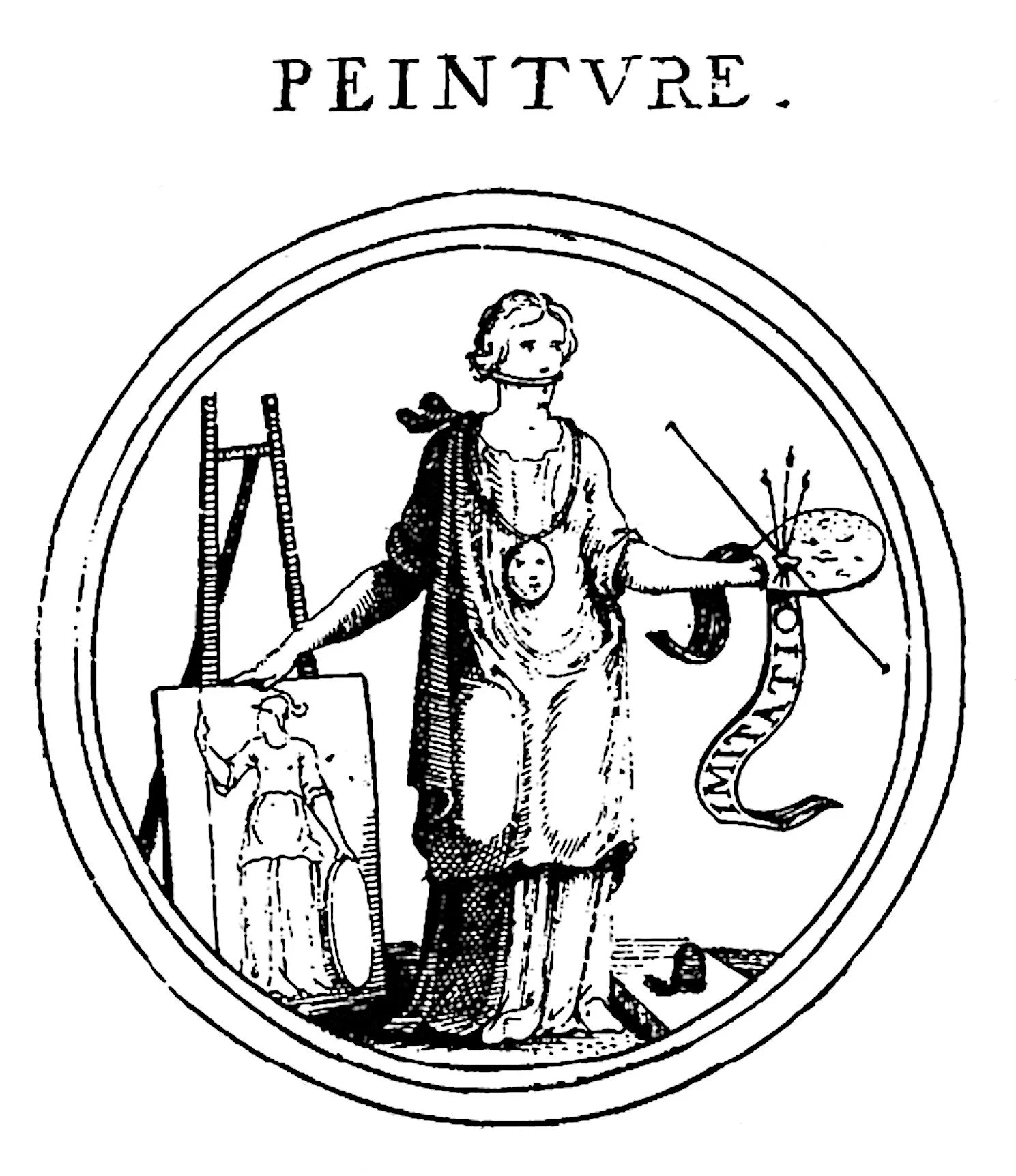
1644 depiction of Pittura
1766 depiction of Pittura
And thirdly, the binds are a way for me to highlight not only the censorship of Artemisia, but of women and women’s bodies in art. I chose to paint myself nude, like Artemisia’s original painting, because there is a certain honesty and vulnerability in nudity that I wanted to express. This painting, after all, is my reclamation of my practice and my very personal statement that says: “I am and have always been an artist, and now I am back”.
P.S. - Here are some links where you can read more about the restoration of Artemisia’s painting.
https://www.calliopearts.org/post/ready-to-share-with-the-world
https://www.theflorentine.net/2022/11/03/fridays-with-artemisia-at-casa-buonarroti/